Mittwoch, 27. Februar 2013

Australia
"Contains an Enclosure"


Australia #7B (sealing flap on top 13 mm wide) sent from MELBOURNE (machine cancellation 14 FEB 1955).  

The sender, a stamp dealer, failed to comply with one of the basic rules for aerogrammes. He enclosed something inside the aerogramme (a price list for kiloware, as is revealed by the message on the writing panel).

The admonition on the back panel states "If anything is enclosed, letter will be sent by ordinary mail." The postal authorities detected the enclosure, h/s the aerogramme "Contains / an Enclosure" and diverted the aerogramme to surface mail, which was indicated by crossing out the "By Air Mail" routing instruction.

Sonntag, 24. Februar 2013

Australia
Airletter Service not Available


Airletter (Australia #1) sent from “R.A.A.F. P.O. .. PIRIE” on July 19, 1945 to Gladbrook, Iowa/U.S.

Airletter service to the U.S. became available only on February 10, 1947. Consequently, the airletter was h/s “Air Letter Service Not Available” and diverted to surface mail.


The boxed h/s “Postal Concession Rate / Department of Air” was applied routinely and has no special meaning here as there was no concession rate for airletters.


Sydney Morning Herald -- Feb 10, 1947

Australia
Privately Manufactured Aerogramme as a Souvenir for the 1954 Royal Visit


This aerogramme form was manufactured by Blake & Hargreaves Pty Ltd. of Marrickville, NSW (Postmaster-General's permit no. 2) as a souvenir for the 1954 Royal Visit to Australia. It shows the coats of arms of the Australian States in gold and red on the writing panel (picture below).

The aerogramme was sent from MELBOURNE (cds 26 MAR 1954) to the UK. Two stamps (Stanley Gibbons #272 and #273) with a face value of 11d were affixed, which overpays  the aerogramme rate of 10d by 1d. Apparently, the sender wanted to use the commemorative stamps issued for the Royal Visit and as no 10d stamps or stamps where the face values add up to 10d were issued on this occasion he/she took those coming most near to the required postage rate.


Samstag, 23. Februar 2013

Rhodesia & Nyasaland
Enclosure - Diverted to Surface Mail


This aerogramme form was sent from LUSAKA (cds 12 MAR 1959) to New Jersey, U.S. The 1s stamp correctly paid the aerogramme rate to the U.S. in 1959, but the post office clerk detected an enclosure in the aerogramme and endorsed "ENCLOSURE" to indicate the violation of a basic rule for aerogrammes: "An air letter should not contain any enclosure; if it does it will be surcharged or sent by ordinary mail".  Accordingly, the aerogramme was treated as an airmail letter for which it was short paid. Hence, the aerogramme was diverted to surface mail.

Mittwoch, 20. Februar 2013

India
Under Certificate of Posting


This aerogramme (Wiegand no. 40)) was sent from CALCUTTA to Sheffield, UK.

In India, any unregistered postal items could be posted under certificate of posting, which worked as a proof of posting. Usually, the sender prepared a list of the items to be mailed under the certificate and affixed stamps to pay for the certificate. The post office clerk, then, confirmed the acceptance of the items by cancelling the stamps paying the certificate's fee with a date stamp.

This service was discontinued in 2011.


References
Wiegand stands for Wiegand, Katalog der Aerogramme von Asien, 2000


Burma
Double Printing of the Indicium


The aerogramme (Wiegand no. 7) was sent from RANGOON (cds 7 FEB 67) to Tucson, U.S. Even if the aerogramme went through the postal network it is philatelic to some extent. The addressee, Walter R. Guthrie, was a well known aerogramme collector and loads of aerogrammes without any message on the writing panel exist adressed to him.

This aerogramme shows a double printing of the red indicium, see detail below.


References
Wiegand stands for Wiegand, Katalog der Aerogramme von Asien, 2000

Dienstag, 19. Februar 2013

Australia
Privately Manufactured Aerogramme Form for Official Use

In Australia, it was allowed to manufacture, sell, and use privately manufactured aerogramme forms provided that the aerogramme form has been accepted by the postal authorities before. These "permit" or "licensed" aerogramme forms have an authorization imprint, e.g. "Approved by Postmaster-General for acceptance as ..." usually in the lower left corner of the front panel.

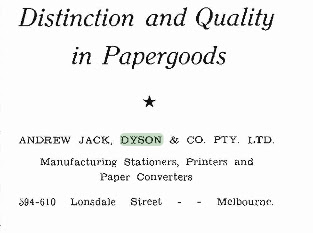
The aerogramme form below, manufactured by Andrew Jack Dyson & Co. Pty. Ltd. of Notting Hill, Vic. has the Postmaster-General's permit no. 15. The permit no. refers to the manufacturer not to the individual aerogramme form.


Most of the permit aerogramme forms have been manufactured for private use. Few have been manufactured for official use as O.H.M.S ("On His/Her Majesty Service") aerogrammes. Offical O.H.M.S aerogrammes were available but, with rare exceptions, only used by the Postmaster-General's department.

The aerogramme has a "O.H.M.S." imprint in the upper left corner of the front panel and a  printed letterhead of the Department of Labour and National Service, Melbourne, on the writing panel. It was sent from Melbourne (10d meter stamp, 14. Nov. 57) to Surrey, UK.

Below is an advertisement of the company.